TACTICAL BRIEFING
//
15 October 2026
FC Copenhagen Women: A New Force in Danish Football Seeking Success
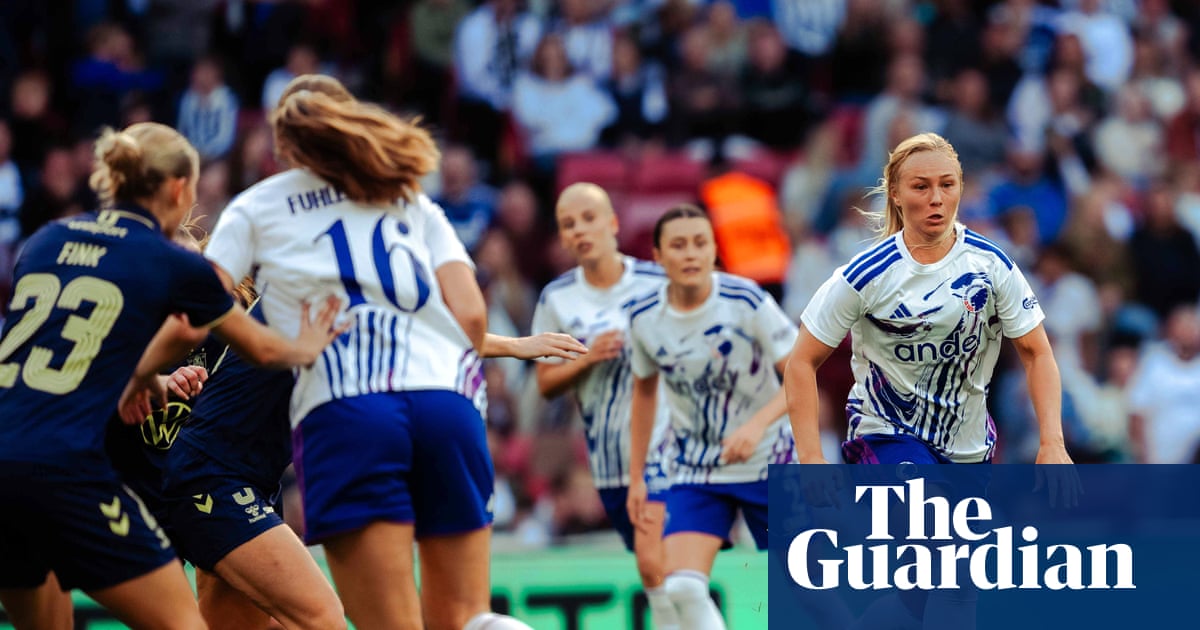
On a sunny August day in 2024, 5,165 supporters packed into Vanløse Idrætspark to witness FC Copenhagen (FCK) kick off their league campaign against B73 Slagelse. As Denmark's most decorated men's club, boasting 16 league titles, FCK's foray into women's football, in partnership with FC Damsø, has generated high hopes for both on and off the pitch.
In just over two years, FCK has made remarkable strides, achieving consecutive promotions to reach the A-Liga. Now, as they compete in the top tier, Romaney Pinnock, head of women’s football, describes the challenge ahead as “playing with the big dogs.” The club must quickly adapt to solidify their place among elite competition.
“The plan was always to arrive here swiftly,” Pinnock reflects, “with some leeway in case things didn’t go as planned. Now we need to establish our identity. There’s a tremendous opportunity to be a fresh venture under the umbrella of a well-known and respected brand.”
With the established club's resources at their disposal, FCK has crafted a unique identity for their women's team. They've launched a distinct kit, secured their sponsors, and created an engaging matchday atmosphere. Their latest derby against Brøndby set an A-Liga attendance record, attracting 8,047 fans to Parken.
However, building a solid foundation takes time. As they navigate their first season at the highest level, FCK has faced some growing pains. Following a shaky start, they parted ways with head coach Kasper Klarskov Nielsen after just three matches and find themselves in a precarious second-to-last position after ten games. Many players are still balancing their football commitments with work or studies while adjusting to the increased demands of top-flight competition.
“It’s been a tough ride so far,” admits forward Maria Hovmark. “It's our first year in this league, and we need to adapt. About 80-90% of us have never played at this level, so it’s a big challenge. The club is learning too, and we all have a chance to grow together.”
FCK’s journey unfolds in a league that is itself striving for growth. Denmark has produced standout talents like Pernille Harder, and the Danish Football Association (DBU) is investing in the domestic game to raise standards and increase visibility, aiming for success in European competitions. The reigning champions, HB Køge, have returned to the Champions League for the first time since 2022, while Brøndby is set to compete in the Europa Cup's last 16.
“I anticipated a more egalitarian setup due to Denmark's politics, but it’s clear women’s football is still in its early stages,” Pinnock observes, a South African who previously led women’s football at Bristol City. “Some clubs are pushing boundaries, but many need to step up. That presents an exciting opportunity for us to look at our neighbors and learn from their successes.”
FCK's approach differs from Køge, who have made immediate investments on the pitch. The club’s long-term vision is to contend for trophies, make a mark in Europe, and become influential in the global transfer scene. They also aspire to develop homegrown talent that sees staying in Denmark as a viable option, while reacquiring experienced players like Hovmark.
“The league is evolving, with some teams transitioning to full-time setups,” Hovmark notes. “It’s becoming more serious, which naturally attracts more players and elevates the overall level.”
FCK is also focused on their broader societal impact. Their “Hall of Femmes” initiative, in partnership with Andel, showcases young female footballers on banners at Parken and offers scholarships to aspiring players aged 14-19. They are also experimenting with an academy model that promotes mixed training for girls and boys based on age and skill rather than gender.
For now, the primary goal is to ensure they remain in the A-Liga. Yet, the club is keenly aware that on-field success is imperative, and the grace period won’t last indefinitely. “We’ll have a couple of seasons to get it right,” Pinnock asserts. “Then it’s time to fully embrace the FCK ethos of being winners and striving for the top.”